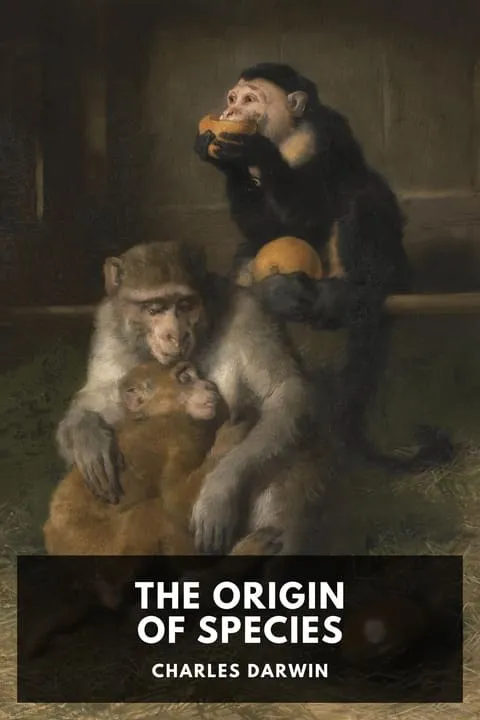
The Origin of Species
A distinguished amateur scientist lays out the evidence for the origin of species by means of natural selection.
Mục lục
- Imprint
- Epigraphs
- An Historical Sketch of the Progress of Opinion on the Origin of Species, Previously to the Publication of the First Edition of This Work
- Introduction
- The Origin of Species by Means of Natural Selection
- I: Variation Under Domestication
- Causes of Variability
- Effects of Habit and of the Use or Disuse of Parts; Correlated Variation; Inheritance
- Character of Domestic Varieties; Difficulty of Distinguishing Between Varieties and Species; Origin of Domestic Varieties from One or More Species
- Breeds of the Domestic Pigeon, Their Differences and Origin
- Principles of Selection Anciently Followed, and Their Effects
- Unconscious Selection
Xem tất cả 111 chương
- Circumstances Favourable to Man’s Power of Selection
- II: Variation Under Nature
- Individual Differences
- Doubtful Species
- Wide-Ranging, Much Diffused, and Common Species Vary Most
- Species of the Larger Genera in Each Country Vary More Frequently Than the Species of the Smaller Genera
- Many of the Species Included Within the Larger Genera Resemble Varieties in Being Very Closely, but Unequally, Related to Each Other, and in Having Restricted Ranges
- Summary
- III: Struggle for Existence
- The Term, Struggle for Existence, Used in a Large Sense
- Geometrical Ratio of Increase
- Nature of the Checks to Increase
- Complex Relations of All Animals and Plants to Each Other in the Struggle for Existence
- Struggle for Life Most Severe Between Individuals and Varieties of the Same Species
- IV: Natural Selection; or the Survival of the Fittest
- Sexual Selection
- Illustrations of the Action of Natural Selection, or the Survival of the Fittest
- On the Intercrossing of Individuals
- Circumstances Favourable for the Production of New Forms Through Natural Selection
- Extinction Caused by Natural Selection
- Divergence of Character
- The Probable Effects of the Action of Natural Selection Through Divergence of Character and Extinction, on the Descendants of a Common Ancestor
- On the Degree to Which Organisation Tends to Advance
- Convergence of Character
- Summary of Chapter
- V: Laws of Variation
- Effects of the Increased Use and Disuse of Parts, as Controlled by Natural Selection
- Acclimatisation
- Correlated Variation
- Compensation and Economy of Growth
- Multiple, Rudimentary, and Lowly-Organised Structures Are Variable
- A Part Developed in Any Species in an Extraordinary Degree or Manner, in Comparison with the Same Part in Allied Species, Tends to Be Highly Variable
- Specific Characters More Variable Than Generic Characters
- Secondary Sexual Characters Variable
- Distinct Species Present Analogous Variations, So That a Variety of One Species Often Assumes a Character Proper to an Allied Species, or Reverts to Some of the Characters of an Early Progenitor
- Summary
- VI: Difficulties of the Theory
- On the Absence or Rarity of Transitional Varieties
- On the Origin and Transition of Organic Beings with Peculiar Habits and Structure
- Organs of Extreme Perfection and Complication
- Modes of Transition
- Special Difficulties of the Theory of Natural Selection
- Organs of Little Apparent Importance, as Affected by Natural Selection
- Utilitarian Doctrine, How Far True: Beauty, How Acquired
- Summary: The Law of Unity of Type and of the Conditions of Existence Embraced by the Theory of Natural Selection
- VII: Miscellaneous Objections to the Theory of Natural Selection
- VIII: Instinct
- Inherited Changes of Habit or Instinct in Domesticated Animals
- Special Instincts
- Instincts of the Cuckoo
- Slave-Making Instinct
- Cell-Making Instinct of the Hive-Bee
- Objections to the Theory of Natural Selection as Applied to Instincts: Neuter and Sterile Insects
- Summary
- IX: Hybridism
- Degrees of Sterility
- Laws Governing the Sterility of First Crosses and of Hybrids
- Origin and Causes of the Sterility of First Crosses and of Hybrids
- Reciprocal Dimorphism and Trimorphism
- Fertility of Varieties When Crossed, and of Their Mongrel Offspring, Not Universal
- Hybrids and Mongrels Compared, Independently of Their Fertility
- Summary of Chapter
- X: On the Imperfection of the Geological Record
- On the Lapse of Time, as Inferred from the Rate of Deposition and Extent of Denudation
- On the Poorness of Palaeontological Collections
- On the Absence of Numerous Intermediate Varieties in Any Single Formation
- On the Sudden Appearance of Whole Groups of Allied Species
- On the Sudden Appearance of Groups of Allied Species in the Lowest Known Fossiliferous Strata
- XI: On the Geological Succession of Organic Beings
- On Extinction
- On the Forms of Life Changing Almost Simultaneously Throughout the World
- On the Affinities of Extinct Species to Each Other, and to Living Forms
- On the State of Development of Ancient Compared with Living Forms
- On the Succession of the Same Types Within the Same Areas, During the Later Tertiary Periods
- Summary of the Preceding and Present Chapters
- XII: Geographical Distribution
- Single Centres of Supposed Creation
- Means of Dispersal
- Dispersal During the Glacial Period
- Alternate Glacial Periods in the North and South
- XIII: Geographical Distribution—Continued
- Freshwater Productions
- On the Inhabitants of Oceanic Islands
- Absence of Batrachians and Terrestrial Mammals on Oceanic Islands
- On the Relations of the Inhabitants of Islands to Those of the Nearest Mainland
- Summary of the Last and Present Chapters
- XIV: Mutual Affinities of Organic Beings: Morphology—Embryology—Rudimentary Organs—Classification
- Analogical Resemblances
- On the Nature of the Affinities Connecting Organic Beings
- Morphology
- Development and Embryology
- Rudimentary, Atrophied, and Aborted Organs
- Summary
- XV: Recapitulation and Conclusion
- Glossary of the Principal Scientific Terms Used in the Present Volume
- List of Illustrations
- Endnotes
- Colophon
- Uncopyright
Nghe miễn phí trong LeziBook
Tải LeziBook, mở Kho sách, tìm “The Origin of Species” và bấm Nghe ngay. Sách vào thư viện và app bắt đầu đọc to.
Nguồn: Standard Ebooks. CC0 1.0 (Standard Ebooks edition); the text is in the public domain
 The Voyage of the Beagle
 Việc làng
 Việt Nam Sử Lược
 “We”
 A General History of the Pirates
 A Journal of the Plague Year