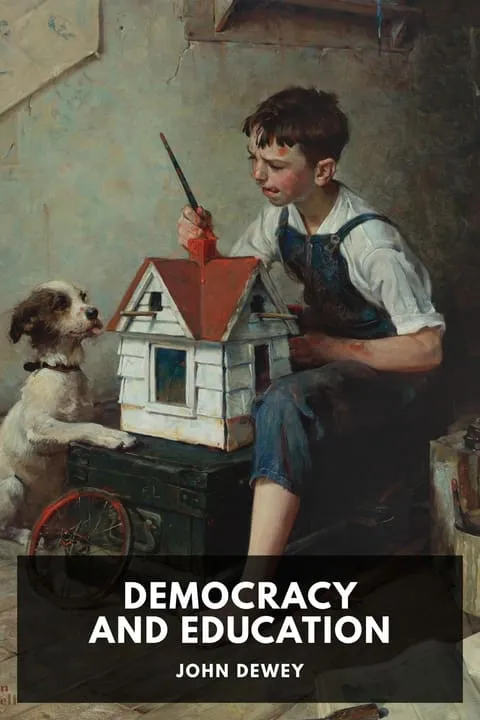
Democracy and Education
A critical survey of the philosophy and aims of education in a democratic society.
Contents
- Imprint
- Preface
- Democracy and Eduction
- I: Education as a Necessity of Life
- I: Renewal of Life by Transmission
- II: Education and Communication
- III: The Place of Formal Education
- Summary
- II: Education as a Social Function
- I: The Nature and Meaning of Environment
- II: The Social Environment
- III: The Social Medium as Educative
Show all 137 chapters
- IV: The School as a Special Environment
- Summary
- III: Education as Direction
- I: The Environment as Directive
- II: Modes of Social Direction
- III: Imitation and Social Psychology
- IV: Some Applications to Education
- Summary
- IV: Education as Growth
- I: The Conditions of Growth
- II: Habits as Expressions of Growth
- III: The Educational Bearings of the Conception of Development
- Summary
- V: Preparation, Unfolding, and Formal Discipline
- I: Education as Preparation
- II: Education as Unfolding
- III: Education as Training of Faculties
- Summary
- VI: Education as Conservative and Progressive
- I: Education as Formation
- II: Education as Recapitulation and Retrospection
- III: Education as Reconstruction
- Summary
- VII: The Democratic Conception in Education
- I: The Implications of Human Association
- II: The Democratic Ideal
- III: The Platonic Educational Philosophy
- IV: The “Individualistic” Ideal of the Eighteenth Century
- V: Education as National and as Social
- Summary
- VIII: Aims in Education
- I: The Nature of an Aim
- II: The Criteria of Good Aims
- III: Applications in Education
- Summary
- IX: Natural Development and Social Efficiency as Aims
- I: Nature as Supplying the Aim
- II: Social Efficiency as Aim
- III: Culture as Aim
- Summary
- X: Interest and Discipline
- I: The Meaning of the Terms
- II: The Importance of the Idea of Interest in Education
- III: Some Social Aspects of the Question
- Summary
- XI: Experience and Thinking
- I: The Nature of Experience
- II: Reflection in Experience
- Summary
- XII: Thinking in Education
- I: The Essentials of Method
- Summary
- XIII: The Nature of Method
- I: The Unity of Subject Matter and Method
- II: Method as General and as Individual
- III: The Traits of Individual Method
- IV: Responsibility
- Summary
- XIV: The Nature of Subject Matter
- I: Subject Matter of Educator and of Learner
- II: The Development of Subject Matter in the Learner
- III: Science or Rationalized Knowledge
- IV: Subject Matter as Social
- Summary
- XV: Play and Work in the Curriculum
- I: The Place of Active Occupations in Education
- II: Available Occupations
- III: Work and Play
- Summary
- XVI: The Significance of Geography and History
- I: Extension of Meaning of Primary Activities
- II: The Complementary Nature of History and Geography
- III: History and Present Social Life
- Summary
- XVII: Science in the Course of Study
- I: The Logical and the Psychological
- II: Science and Social Progress
- III: Naturalism and Humanism in Education
- Summary
- XVIII: Educational Values
- I: The Nature of Realization or Appreciation
- II: The Valuation of Studies
- III: The Segregation and Organization of Values
- Summary
- XIX: Labor and Leisure
- I: The Origin of the Opposition
- II: The Present Situation
- Summary
- XX: Intellectual and Practical Studies
- I: The Opposition of Experience and True Knowledge
- II: The Modern Theory of Experience and Knowledge
- III: Experience as Experimentation
- Summary
- XXI: Physical and Social Studies: Naturalism and Humanism
- I: The Historic Background of Humanistic Study
- II: The Modern Scientific Interest in Nature
- III: The Present Educational Problem
- Summary
- XXII: The Individual and the World
- I: Mind as Purely Individual
- II: Individual Mind as the Agent of Reorganization
- III: Educational Equivalents
- Summary
- XXIII: Vocational Aspects of Education
- I: The Meaning of Vocation
- II: The Place of Vocational Aims in Education
- III: Present Opportunities and Dangers
- Summary
- XXIV: Philosophy of Education
- I: A Critical Review
- II: The Nature of Philosophy
- Summary
- XXV: Theories of Knowledge
- I: Continuity Versus Dualism
- II: Schools of Method
- Summary
- XXVI: Theories of Morals
- I: The Inner and the Outer
- II: The Opposition of Duty and Interest
- III: Intelligence and Character
- IV: The Social and the Moral
- Summary
- Endnotes
- Colophon
- Uncopyright
Listen free in LeziBook
Get LeziBook, open the Store, find “Democracy and Education” and tap Listen now. The book lands in your library and the app starts reading aloud.
Source: Standard Ebooks. CC0 1.0 (Standard Ebooks edition); the text is in the public domain
 Human Nature and Conduct
 The Public and Its Problems
 Việc làng
 Việt Nam Sử Lược
 “We”
 A General History of the Pirates